The bakery
We only make one thing
A wholesale bakery in the United Kingdom making soft, eggless Mumbai ladi pav for hotels, cafés and restaurants.
Why we started
The pav was always the weak link
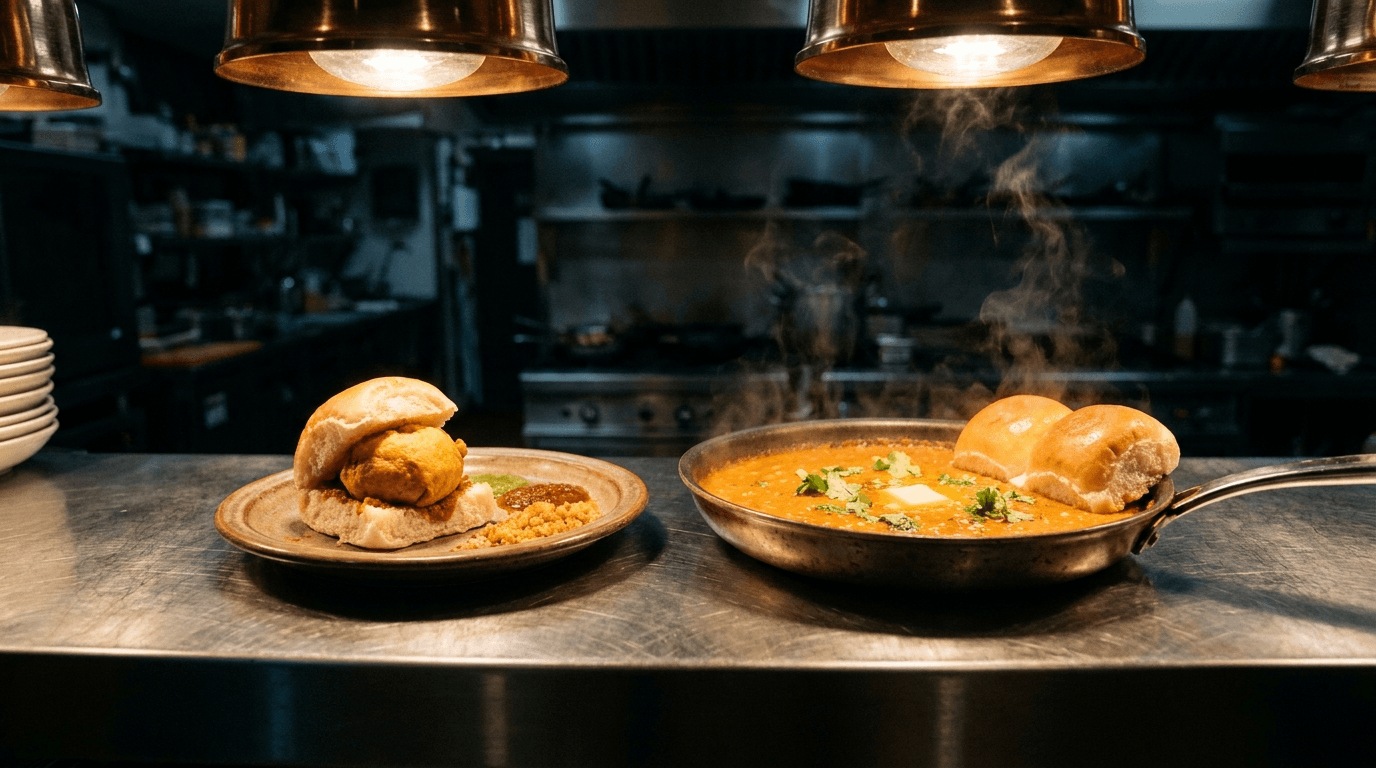
Every Indian kitchen in the country was serving vada pav and pav bhaji on whatever soft roll they could get from a general supplier. Brioche, burger buns, sometimes a milk roll. Close enough to work, never close enough to be right.
We make the bread instead of the menu. One product, made properly, delivered before service. That is the whole business.
How we bake
Japanese milk bread method
A cooked flour starter goes into the dough. It holds moisture through the bake, which is why the crumb stays soft on day five instead of day two.
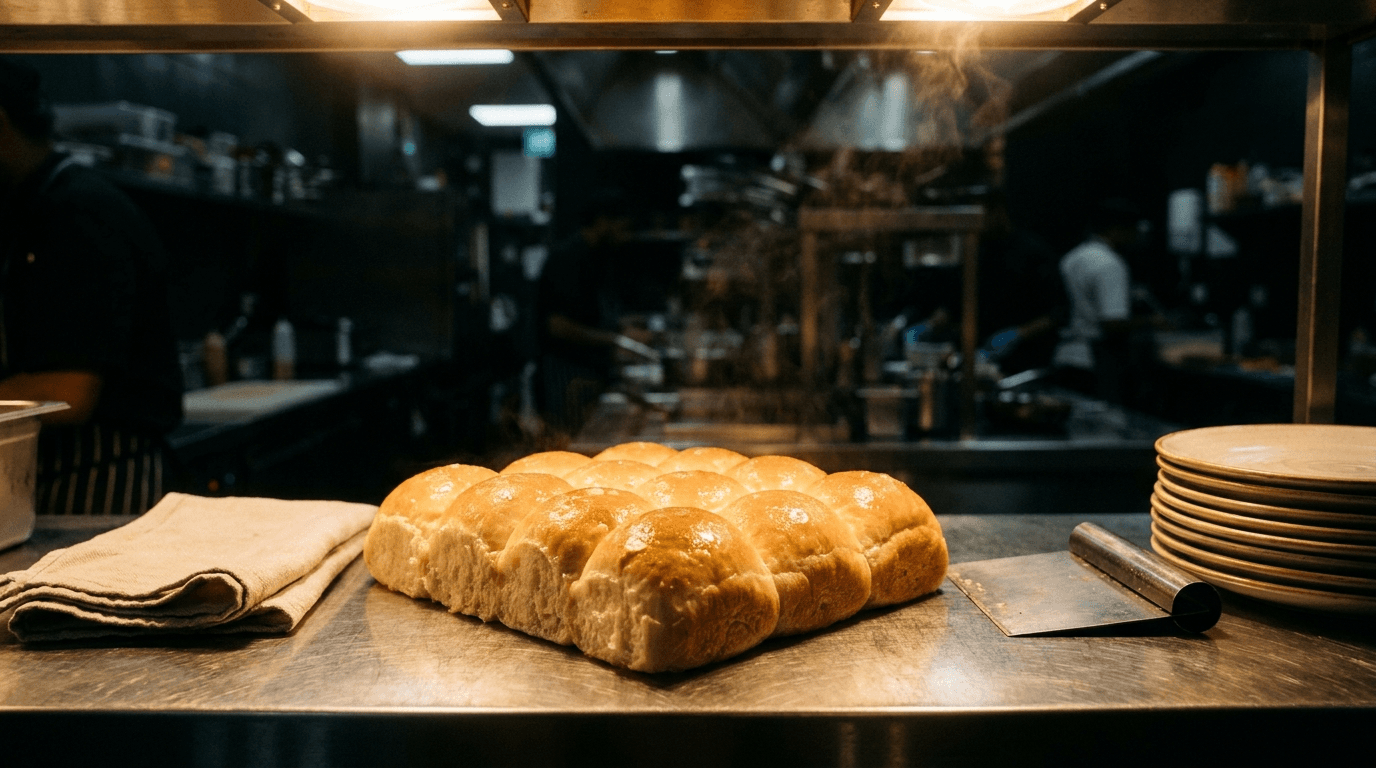
Baked touching
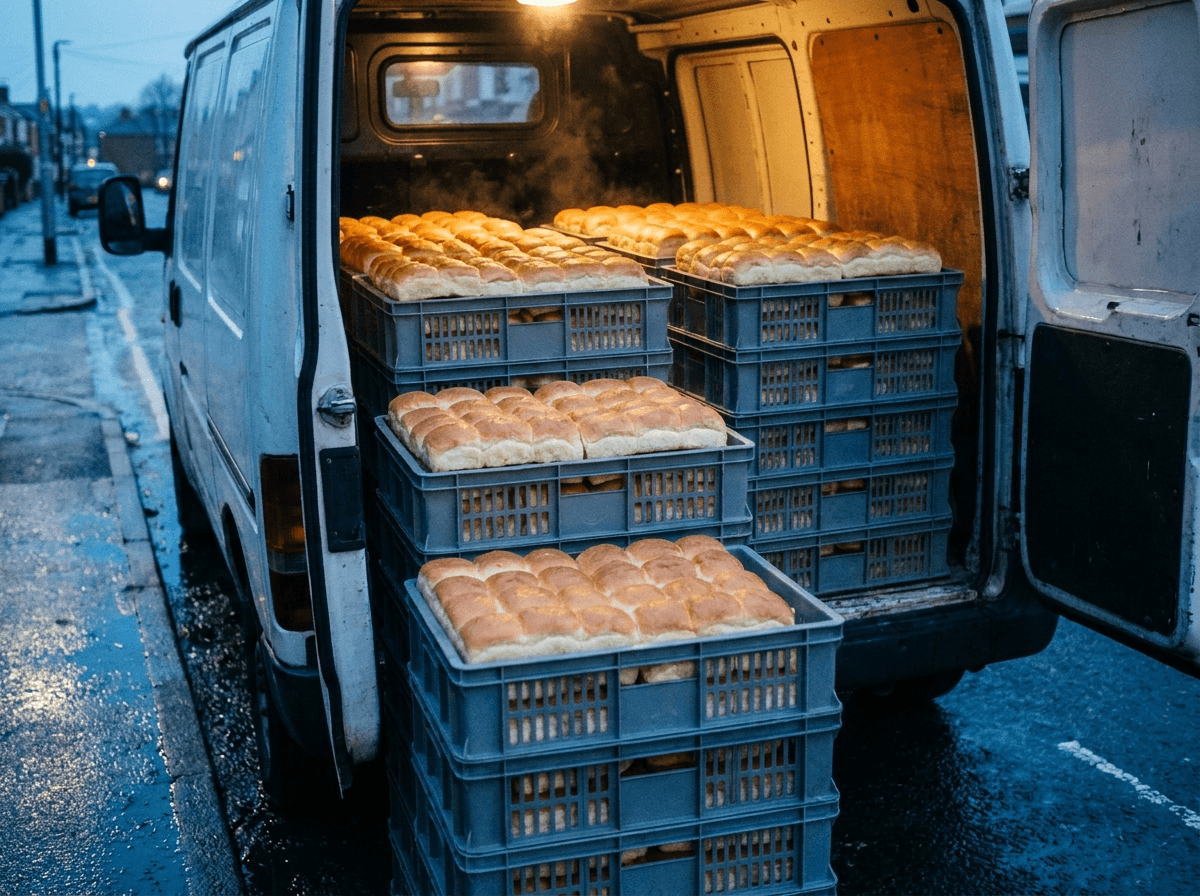
Portioned into a connected block so the sides stay pale and tender. That soft join is what lets a pav tear cleanly and soak without collapsing.
Eggless, not egg-free-ish
No eggs anywhere in the bakery recipe. It is a standing rule, not a variant we run on request.
Made in a kitchen that also handles egg and sesame.
What goes in
Real ingredients and nothing to hide
- Premium wheat flour
- Finely milled to give the dough its signature elasticity and stretch.
- Diastatic malt
- A traditional baker’s malt that feeds the ferment and gives the crust its golden colour.
- Active yeast
- Cultured precisely to create tiny air pockets for maximum fluffiness.
- Zero preservatives
- Free from artificial preservatives and bromates. Seven days fresh comes from the bake.
The 4-step baking process
Slow kneading
We mix our dough slowly to develop a strong gluten network without heating the flour.
Double proofing
The dough rests twice in a humidity-controlled room to build a deep, complex flavour profile.
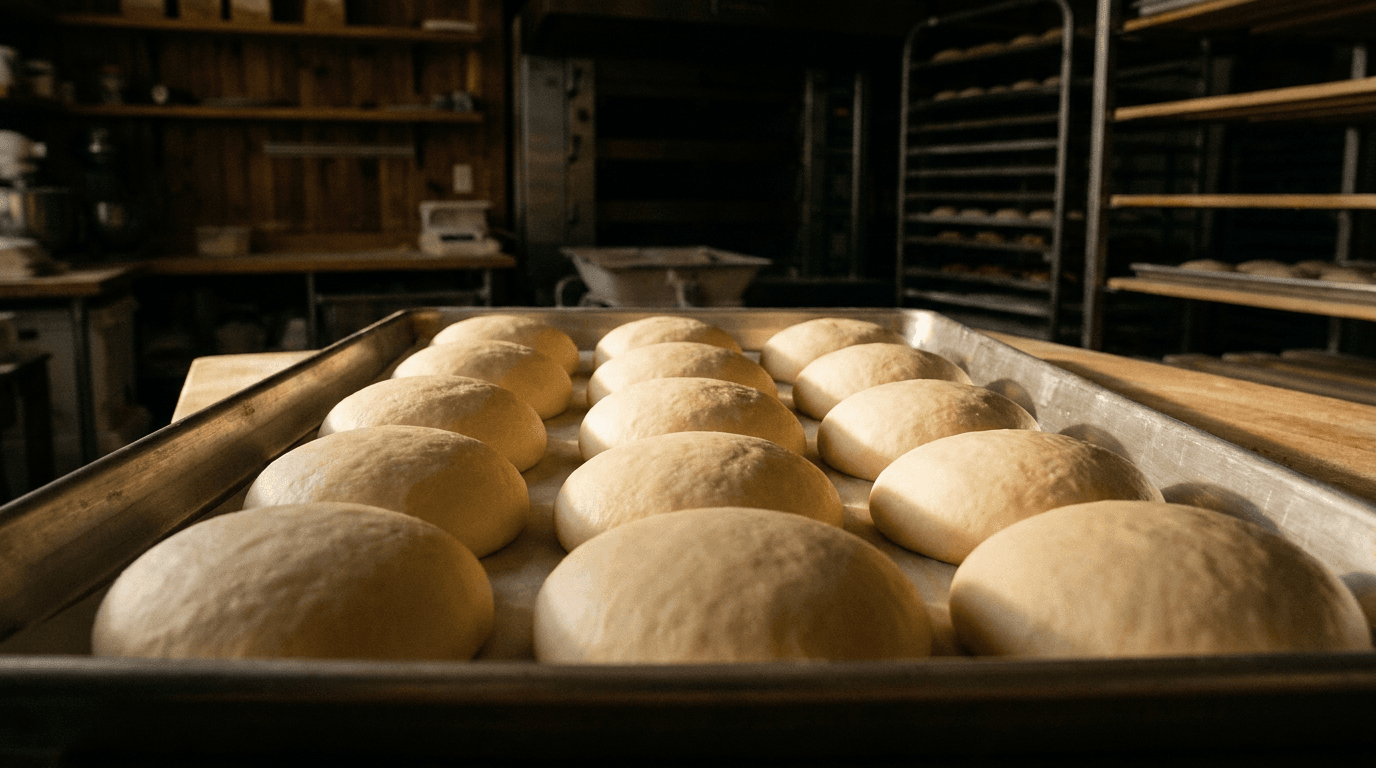
The cluster bake
Shaped closely together in heavy steel trays so they rise upward, not outward.
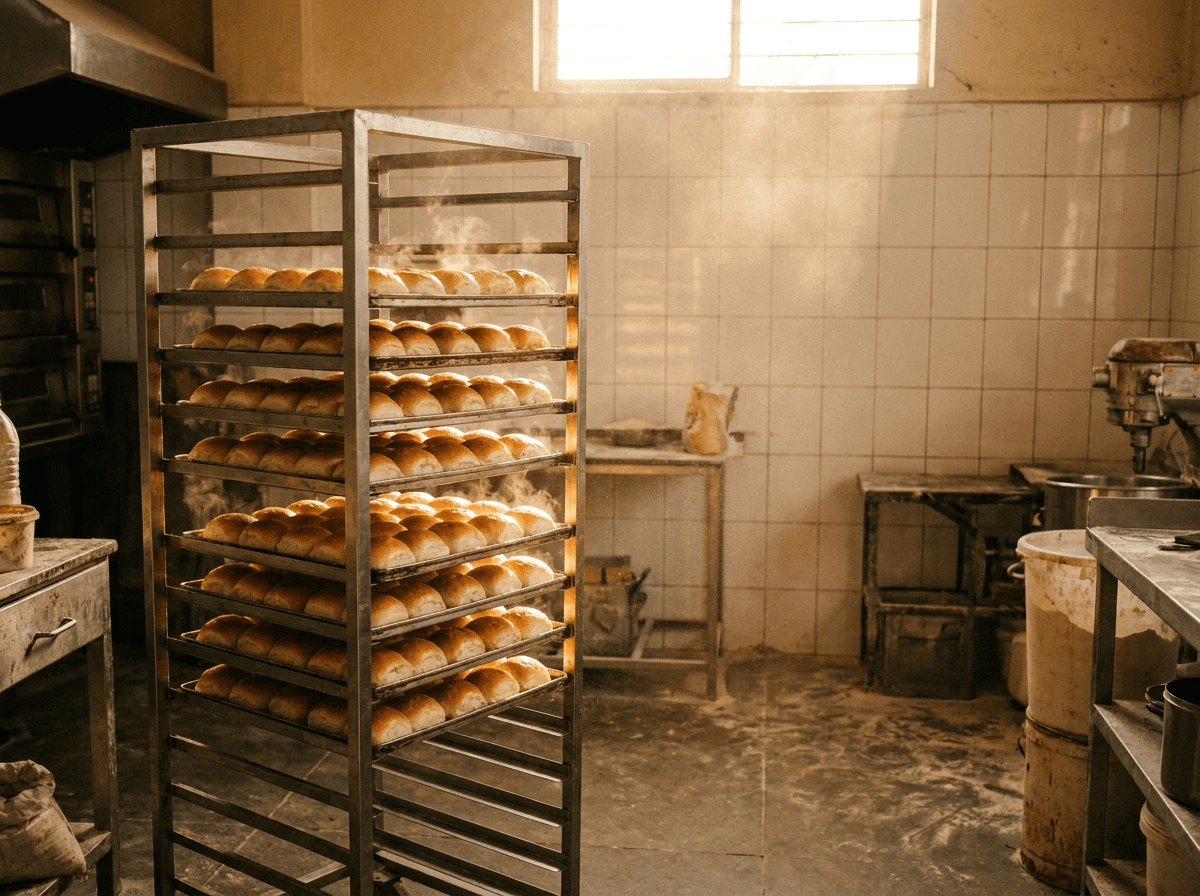
Cooling & packing
After the bake, the blocks are cooled and packed with care to protect the texture and freshness until they reach your kitchen.
Built for service
Pav that performs
For a professional kitchen, consistency matters more than romance. Whether you are plating twenty covers or two hundred, the bread should behave the same way every time.
The squeeze test
Press it gently and it compresses. Let go and it springs back. Tear it open and the crumb stretches, tender rather than dense. That is what we look for in every block.
- Holds its shape
- Soft enough to bite through, strong enough to carry a vada without collapsing.
- Stays soft
- Soft through service and fresh for seven days ambient, without artificial preservatives.
- Toasts evenly
- Cut side down on a hot tawa, golden and lightly crisp while the centre stays soft.
- Absorbs butter
- Made for the tawa. Butter melts into the crumb instead of sitting on top of it.
- Carries sauces and gravies
- Soaks up bhaji, misal and keema without going soggy.
- Portions consistently
- Pull one from the block. Same weight, same tear, every service.
Who we bake for
Trade only, and that is the point
We do not sell to the public, we do not have a shop, and we do not stock supermarkets. Everything we bake goes to a kitchen: hotels, restaurants, cafés, caterers, street food operators and food manufacturers. That keeps the run sizes honest and the bread on your bench the morning it was baked.